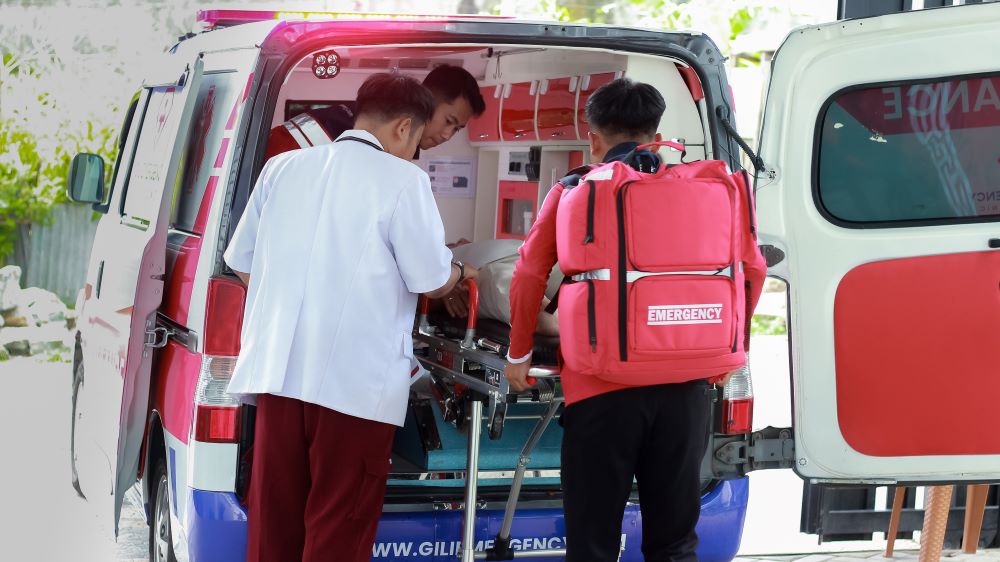
If you’ve ever dreamed of escaping to Gili Trawangan, Gili Air, or Gili Meno, you probably imagine slow mornings, turquoise water, and that peaceful island vibe where time feels softer. But here’s a little reality-check most travelers forget: What happens if you need emergency help?
That’s exactly where ambulance Gili steps in—quietly, efficiently, and often behind the scenes.
I still remember a moment when a fellow traveler twisted his ankle during a sunset bike ride in Gili Trawangan. Nothing life-threatening, but enough to send a jolt of panic. Watching how the emergency team handled the situation made me appreciate how unique and impressive the system really is.
Let’s dive into everything you should know about ambulance Gili, especially since medical emergencies work very differently on a motor-free island.
How Does an Ambulance Work on an Island With No Motor Vehicles?
It’s one of the first questions people ask—and honestly, it’s a fair one. There are no cars, no motorbikes, and no traditional ambulances. So how does ambulance Gili actually operate?
The answer: a mix of creativity and island-adapted solutions.
Emergency response on the Gili Islands typically starts with a modified push-cart stretcher or an electric medical vehicle allowed only for emergencies. These vehicles are lightweight, narrow, and surprisingly agile on sandy, narrow paths.
I once watched the team maneuver one of these carts between rows of bicycles and horses. The soft crunch of sand, the dim golden light, the sound of waves in the background—it felt almost cinematic.
But make no mistake: they’re fast when they need to be.
For serious conditions, patients are then transferred to a medical boat, the heart of the ambulance Gili system.
The Marine Ambulance: The Real Lifeline of the Gili Islands
Because the islands don’t have full-scale hospitals, any critical case must be transported to Lombok. This is where the marine ambulance becomes the superstar.
These boats are equipped with:
-
Oxygen tanks
-
Stretcher mounts
-
Basic emergency tools
-
Trained crew
And yes, they operate day and night.
Picture this: a boat slicing through moonlit water, engine humming steadily, medical crew calmly monitoring a patient while waves gently nudge the hull. It’s a surreal mix of beauty and urgency.
Most travelers don’t realize how smooth the coordination between island clinics and mainland medical centers is. That synergy is what makes the ambulance Gili system work so effectively.
Challenges That Ambulance Teams Face in the Gilis
Sure, the system works—but it’s not without challenges. The reality of running ambulance Gili services on remote islands includes hurdles you wouldn’t find in big cities.
1. Limited Medical Equipment
Clinics on the islands are usually equipped for basic treatment:
-
Wound care
-
Minor fractures
-
Allergic reactions
-
Heat exhaustion
But severe trauma or cardiac issues require evacuation. Depending on weather and sea conditions, even a short trip can require patience—and nerves of steel.
2. Narrow, Sandy Roads
Those charming sandy paths that make the Gilis feel magical?
They’re a logistical nightmare for emergency teams.
Maneuvering a stretcher past tourists, bicycles, and cidomo (horse carts) isn’t always easy. Still, operators of ambulance Gili have become masters of navigating tricky terrain.
3. Weather and Rough Seas
The biggest challenge of all. High waves can delay evacuation, sometimes by 20–40 precious minutes. If you’ve ever stood by the beach during strong winds, you know how unpredictable the sea can be.
4. Limited Night Visibility
Even with flashlights and emergency lights, nighttime emergencies require extra caution. Yet the teams remain impressively quick.
Who Actually Runs the Gili Ambulance System?
Most people assume there’s one central organization, but the reality is a collaborative ecosystem.
The ambulance Gili network typically involves:
-
Local clinics (public and private)
-
Community health centers (puskesmas)
-
Boat operators trained for medical evacuation
-
Government agencies coordinating resources
-
Volunteers who assist during peak emergencies
I once spoke to a boat operator who told me, “When someone needs help, the whole island moves.” And honestly? It’s true.
When Might a Traveler Need an Ambulance in Gili?
Thankfully, most medical situations are minor. Tourists often seek help for:
-
Bicycle accidents
-
Coral cuts
-
Snorkeling or diving injuries
-
Dehydration
-
Heatstroke
-
Food-related issues
More serious cases—like chest pain, deep wounds, or severe allergic reactions—are when ambulance Gili becomes absolutely essential.
Just knowing where the nearest clinic is can save precious minutes.
How Can You Prepare Before Visiting the Gilis?
You don’t need to become overly cautious. But small steps can make your trip much safer.
Try this simple checklist:
-
Save emergency numbers on your phone.
-
Know the nearest clinic from your accommodation.
-
Wear proper footwear when biking.
-
Don’t snorkel alone—ever.
-
Hydrate more than you think you need.
-
Bring basic meds if you’re sensitive to food or weather changes.
When you’re prepared, the team behind ambulance Gili can help you even faster.
A Night I’ll Never Forget: A Mini Story From Gili Trawangan
One warm evening, I saw firsthand how quickly the system works. A traveler experienced a severe asthma attack outside a beach café. Within moments, two medical staff arrived with a compact emergency cart.
The scene was intense: the flicker of headlamps, the rhythmic crash of waves, the patient’s strained breathing. Every movement from the responders was precise—calming, efficient, reassuring.
Minutes later, the patient was on a marine ambulance heading toward Lombok. Watching the boat’s lights fade into the distance, I felt a deep respect for the people behind ambulance Gili. They’re unsung heroes of the islands.
Why the Gili Ambulance System Truly Matters
The Gilis may feel like peaceful islands frozen in time—but emergencies can happen anywhere. Understanding the unique system behind ambulance Gili helps you appreciate how safety and serenity coexist on these islands.
It’s not high-tech. It’s not flashy. But it works—and it saves lives.
So the next time you plan a trip to the Gilis, enjoy the beaches, the sunsets, and the slow living. Just remember that behind the calm is a dedicated team ready to move fast when it matters.